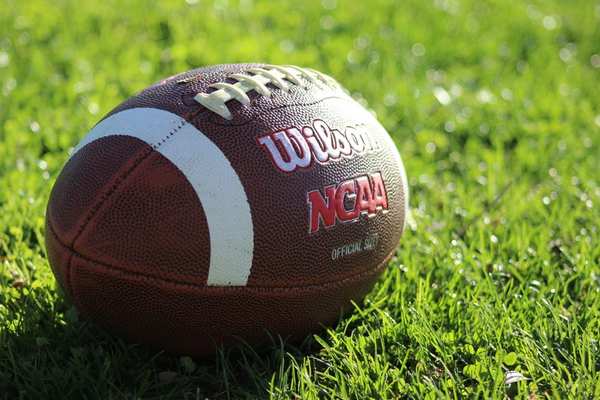
If you already follow the NFL from the UK, college football can look familiar for a few minutes. The field is the same length, touchdowns still score six points, and teams still get four downs to move the chains. Then a receiver completes a catch with one foot in bounds, overtime starts at the opponent’s 25-yard line, and a stadium full of students erupts to a fight song.
The easiest way to understand NCAA vs NFL differences is to treat college football as its own version of the sport. The core game is shared, but the rules, season structure, player eligibility and culture create a noticeably different experience.
NCAA Football Is College Sport; the NFL Is Professional
The NFL is a professional league with 32 franchises. Players work under contracts, and the competition leads through the playoffs to the Super Bowl.
NCAA football is played by colleges and universities. Division I includes the Football Bowl Subdivision and Football Championship Subdivision, while Divisions II and III have separate structures. Players are student-athletes who must satisfy academic and athletics eligibility requirements.
That creates constant roster turnover. NFL clubs can keep established stars for years, while college teams regularly replace players who graduate, transfer, exhaust eligibility or leave for professional football.
The College Football Rules NFL Fans Notice First
Sideline Catches Need Only One Foot in College
One of the clearest college football rules differences appears near the boundary. In NCAA football, a receiver can complete a catch with one foot down in bounds while maintaining the required control. In the NFL, a receiver generally needs two feet, or another body part other than the hands, in bounds.
For a UK viewer, this is worth remembering immediately. A toe-tap catch that looks incomplete by NFL standards may be perfectly legal on Saturday.
College Hash Marks Are Wider
College hash marks sit farther apart than NFL hash marks. The ball can therefore be spotted closer to one sideline, creating a larger field side and a tighter boundary side. Coaches can exploit that extra space with formations, option concepts and passing combinations.
The NFL’s narrower hashes keep the ball closer to the middle, helping explain why some college offences look more spread out.
Clock Rules Are Similar but Not Identical
NCAA games include an automatic timeout with two minutes remaining in the second and fourth quarters. For most of the game, the clock continues after a first down gained in bounds; inside the final two minutes of each half, it stops for the first down before restarting when the ball is ready.
This matters in an NFL rules comparison because older explanations may describe college timing that is no longer current.
Overtime Works Very Differently
NCAA overtime gives each team an opportunity from the opponent’s 25-yard line in the first two overtime periods. From the second overtime, a team scoring a touchdown must try for two points. If the game reaches a third overtime, teams alternate two-point plays until a winner is produced.
The NFL uses timed overtime. Regular-season overtime lasts 10 minutes, and both teams are entitled to an opportunity to possess the ball under the current rules. A regular-season NFL game can still finish tied, while postseason games continue until there is a winner.
Imagine a 27-27 game after regulation. College football immediately becomes a short-field contest. In the NFL, punts, field position and normal drives can still decide the result. That scenario shows why overtime feels so different.
Season Length and the Championship Path
An NFL team plays 17 regular-season games across an 18-week schedule before the playoffs. The route is straightforward: qualify for the postseason, progress through the AFC or NFC bracket, then reach the Super Bowl.
Top-level college football is less uniform. FBS teams typically play 12 regular-season games, but conference championship games and postseason appearances can extend the schedule. Teams are spread across multiple conferences, so strength of schedule and conference results matter when records are compared.
A 10-2 college team cannot be judged like a 10-win NFL team because opponent quality matters heavily.
NCAA Eligibility Changes How Rosters Develop
NCAA eligibility is a major difference for NFL viewers. College athletes must satisfy academic progress standards alongside athletics rules. Division I is also moving through a significant eligibility change after the NCAA adopted an age-based model in 2026.
For current athletes with eligibility remaining after 2025-26 and students initially enrolling during 2026-27, transition rules can allow the previous system or the new model to apply, depending on which is more beneficial. For incoming students from fall 2027, the age-based model becomes the standard. It generally uses a continuous five-year eligibility period tied to enrolment and age, with limited exceptions.
The NFL has no equivalent NCAA eligibility system. Professional careers are governed by league rules, contracts and roster decisions rather than college academic requirements.
Why College Football Feels Less Predictable
The NFL concentrates elite talent into 32 teams. College football has far more teams and a wider range of resources, player experience and depth. A powerhouse may have future NFL players across its roster, while a smaller programme may depend on development and scheme.
This produces dramatic upsets, occasional lopsided scores and greater tactical variety. Some teams rely on option football, others use wide-open passing attacks, and coaching identities can be especially visible.
Game-Day Culture Is Part of the Appeal
For many supporters, the biggest NCAA vs NFL difference is not in the rulebook. College football is tied to universities, alumni, marching bands, student sections, rivalry trophies and traditions that can stretch back more than a century. Saturday games often feel like major campus events.
The NFL has powerful fan traditions too, but its identity is built around professional franchises. College rivalries often carry regional and historical meaning beyond league position, which is why watching one major rivalry can be a great introduction for a new fan.
FAQ
Is NCAA football the same sport as the NFL?
Yes. Both use the same core system of downs, scoring and field length, but several playing rules and competition structures differ.
Does college football have a two-minute warning?
College football has an automatic two-minute timeout in the second and fourth quarters. It creates a similar break point, although the surrounding timing rules are not identical to the NFL.
Can an NCAA game end in a tie?
No. NCAA overtime continues until a winner is determined. NFL regular-season games can finish tied if the score remains level after overtime.
Why should an NFL fan watch college football?
College football offers familiar American football with different tactics, faster roster turnover, intense university rivalries and a distinctive game-day atmosphere.
What UK NFL Fans Should Remember
You do not need to relearn the sport. Start with the differences that affect what you see most often: one-foot catches, wider hash marks, college overtime, NCAA eligibility and a less uniform season structure. Once those make sense, the game becomes much easier to follow.
The NFL offers the consistency of a tightly controlled professional league. College football adds regional identity, constant roster change and greater stylistic variety. Understanding those differences makes Saturday football less confusing and gives NFL fans another version of the sport to enjoy.