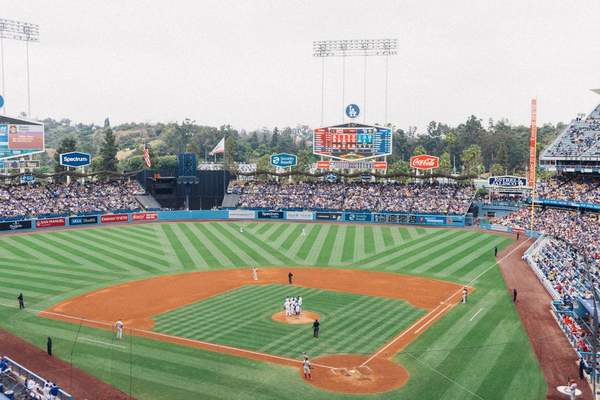
Baseball did not appear fully formed on one summer afternoon, and the familiar story that Abner Doubleday invented the game in Cooperstown in 1839 is not supported by historical evidence. The real history of baseball is more interesting: it grew from older bat-and-ball games, changed through local experimentation, and gradually became a standardized professional sport. That evolution explains why the modern game still carries traces of nineteenth-century rules, business decisions, social conflicts, and cultural traditions.
Baseball Origins Before the Professional Era
The origins of baseball reach back to bat-and-ball games played in Britain, Europe, and North America. Games such as rounders, town ball, stoolball, and old cat combined hitting, running, fielding, and bases in different ways. With no universal rulebook, communities often played according to local customs.
By the first half of the nineteenth century, Americans were playing recognizable forms of baseball. Two important versions emerged: the Massachusetts Game and the New York Game. The diamond-based New York version became more influential as clubs turned an informal pastime into organized competition.
The Knickerbocker Rules and a More Standard Game
The New York Knickerbocker Base Ball Club is closely associated with the early standardization of baseball. Rules adopted by the club in the 1840s helped formalize organized play, although historians caution against crediting one person with inventing the sport. Baseball developed collectively over many years.
As clubs multiplied during the 1850s, consistent rules became more important. A convention of baseball clubs in 1857 helped create a shared framework. The Civil War then contributed to baseball’s spread as soldiers and civilians carried versions of the game to new communities.
Professional Baseball Takes Shape
A major turning point came in 1869, when the Cincinnati Red Stockings became the first recognized openly professional baseball team. Paying players openly changed the sport’s economics and demonstrated that talented teams could attract crowds beyond their home cities.
The National Association of Professional Base Ball Players began play in 1871, but financial instability and weak central control limited its durability. In 1876, club owners formed the National League, creating a more structured competition with stronger rules for membership, scheduling, contracts, and business operations.
For readers building a baseball history timeline, a useful backbone is the 1840s for early written rules, 1869 for openly professional team baseball, 1871 for the first professional league, and 1876 for the founding of the National League.
How the Rules Evolved Into Modern Baseball
Early baseball could look surprisingly different from today’s game. Pitching began as an underhand delivery intended to put the ball in play. Over time, pitchers gained more freedom, and overhand pitching was fully permitted in the National League in 1884. Rule makers repeatedly adjusted the game as the balance between pitcher and hitter changed.
One of the most lasting changes came in 1893, when the pitching distance was set at 60 feet, 6 inches from the pitching plate to home plate. Equipment also evolved: gloves became standard, catchers gained protective gear, baseballs became more consistent, and playing procedures were refined.
A practical way to understand baseball history is to watch a modern inning and identify features created by different eras. The pitching distance reflects a nineteenth-century rule change, the professional league structure grew from the 1870s, and the modern postseason developed later. The game on the field is effectively a living record of its own history.
The American League and the World Series
The history of MLB took another major step when the American League declared itself a major league in 1901. Competition between the established National League and the new league produced disputes over players and contracts, but the sides reached an agreement in 1903.
That year, the Boston Americans and Pittsburgh Pirates met in the first modern World Series. Boston won the best-of-nine matchup. The Series was not played in 1904, but from 1905 it became an enduring championship tradition and a defining symbol of baseball.
Segregation, the Negro Leagues, and Integration
Any meaningful account of baseball history must include the exclusion of Black players from white professional baseball and the excellence of Black baseball outside that system. By the late nineteenth century, segregation was entrenched in the major and minor leagues, so Black players, owners, and communities built their own teams and networks.
Rube Foster helped establish the Negro National League in 1920, a major organizational milestone for Black professional baseball. The Negro Leagues produced extraordinary players including Satchel Paige, Josh Gibson, Oscar Charleston, and Cool Papa Bell. Their achievements are essential to understanding the full history of the sport.
Jackie Robinson’s debut with the Brooklyn Dodgers on April 15, 1947, broke Major League Baseball’s modern color barrier. Integration opened opportunities that had long been denied, while also contributing to the decline of Negro League clubs as leading players moved into previously segregated organizations.
Expansion, Television, and a Changing Game
After World War II, baseball changed alongside the United States. Franchises moved west, most famously when the Dodgers and Giants left New York for California after the 1957 season. Expansion added teams and markets, while television turned local stars into national figures.
The rules continued to evolve. The pitcher’s mound was lowered after the dominant pitching season of 1968. The American League adopted the designated hitter in 1973, and MLB later adopted the universal DH. More recent changes such as larger bases, restrictions on defensive positioning, and a pitch timer show that baseball still adjusts when officials believe pace, safety, or competitive balance needs attention.
Natural companion topics for further reading include baseball rules through the years, the history of the World Series, and the Negro Leagues and integration. Each expands a major branch of the broader story without simply repeating the same timeline.
Baseball as a Cultural Institution
Baseball became more than a competition because it connected generations through ballparks, radio, newspapers, statistics, and family traditions. Its records create continuity even as equipment, training, schedules, and rules change. The sport has no single birthday; it reflects centuries of bat-and-ball traditions and generations of American adaptation.
Frequently Asked Questions
Who invented baseball?
No single person can accurately be credited with inventing baseball. The sport evolved from earlier bat-and-ball games, and American clubs gradually standardized the rules during the nineteenth century. The Abner Doubleday invention story is considered a myth by historians.
When did professional baseball begin?
Professional players existed earlier, but the 1869 Cincinnati Red Stockings are widely recognized as the first openly professional baseball team. The first professional league followed in 1871.
When was the National League founded?
The National League was founded in 1876 and remains part of Major League Baseball today.
When did the first modern World Series take place?
The first modern World Series was played in 1903 between the Boston Americans and Pittsburgh Pirates. Boston won the best-of-nine series.
Conclusion
The history of baseball is a story of gradual change rather than a single invention. Older bat-and-ball traditions became organized club baseball, written rules created consistency, professional teams turned the game into a business, and major leagues built national traditions. Segregation and the Negro Leagues shaped the sport just as deeply as famous teams and championships. From nineteenth-century diamonds to today’s MLB, baseball has endured by adapting while preserving a recognizable core.