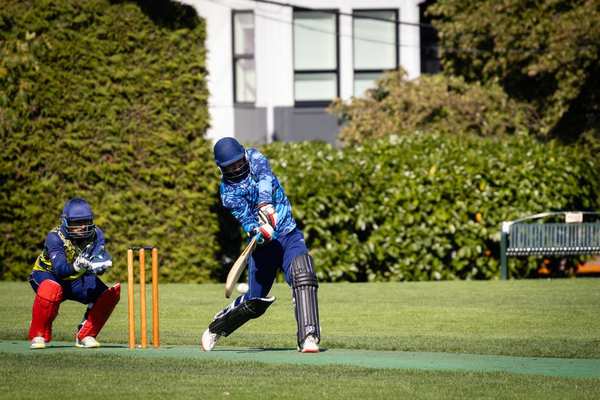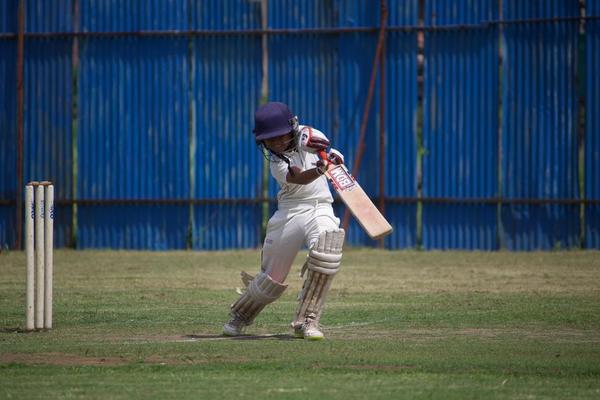
The cricket batting order is more than a list of names on a scorecard. It is a plan for dealing with a changing ball, different bowlers, falling wickets and the pressure of the match. An opener may need to survive movement off the pitch, while a batter arriving much later might be asked to hit boundaries immediately. Understanding those contrasting jobs makes the game easier to follow.
How the Batting Order Works
Two batters begin an innings at the crease. When a wicket falls, another eligible batter normally comes out, until the innings ends. A standard side has eleven players, and an innings is usually over when ten have been dismissed, because the remaining batter has no partner. Limited-overs innings can also finish when the overs run out or a target is reached.
The Laws of Cricket determine who is eligible to bat, but they do not require a team to follow a predeclared numerical batting sequence. A team might expect someone to bat at number five, then send that player in at number three instead. The order shown before a match is therefore a prediction or tactical plan, not an unchangeable rule.
Openers: Facing the New Ball
Batting positions one and two belong to the opening pair. The traditional opening batsman role demands sound judgment outside off stump, good defensive technique and the patience to let dangerous deliveries pass. In Test cricket, the new ball can swing or seam, and openers try to make life easier for everyone following them.
Opening is not purely defensive, though. In one-day cricket, fielding restrictions create chances to score boundaries early. In T20 matches, teams often select attacking openers who can exploit the first six overs of the powerplay. They still need to judge risk: losing both openers cheaply can leave the rest of the lineup rebuilding rather than attacking.
Number Three: The Flexible First Responder
The number-three batter can be needed after the first over or after a hundred-run opening stand. That uncertainty makes adaptability crucial. If an early wicket falls, the job resembles opening: negotiate the hard ball and calm the innings. If the openers provide a strong platform, number three can maintain the scoring rate without letting the bowling side regain control.
Numbers Four and Five: Building or Repairing the Innings
These positions are often associated with the strongest middle-order players. Middle order cricket requires a blend of judgment and scoring ability because circumstances can change dramatically between deliveries. A number-four batter might arrive at 20 for two or 180 for two, facing two entirely different challenges.
In a collapse, the priority is usually to establish a partnership, rotate the strike and force bowlers to keep working. With a solid platform, the same player may accelerate and target particular field placements. Against spin, quick singles and smart use of the crease can be as valuable as an occasional six.
Numbers Six and Seven: Finishers and All-Rounders
The lower middle order frequently contains wicketkeeper-batters, batting all-rounders and specialist finishers. Their task depends heavily on the format. In a T20 chase, a number-six batter may have only fifteen balls to influence the result. In a Test, that same position could require a two-hour partnership with the tail.
A finisher needs more than power. Recognising which bowler to attack, handling slower balls and yorkers, and choosing when to take a single are vital. All-rounders offer another advantage: they contribute with bat and ball, allowing teams to balance bowling options without sacrificing too much batting depth.
Numbers Eight to Eleven: The Tailenders
Tailender cricket usually refers to players near the bottom of the order, commonly specialist bowlers. They may have fewer developed batting skills, but their runs still count. A stubborn number ten can help a set batter add fifty valuable runs, while a number eleven who survives a handful of deliveries can change a tight Test match.
Why the Order Changes Between Formats
Test cricket
Tests reward batters who can cope with different phases of a long innings. Openers protect the lineup against the new ball; experienced middle-order players construct partnerships; and lower-order resistance can turn a competitive total into a commanding one. A nightwatcher, often a lower-order player, may be promoted late in the day to protect a specialist batter from a short, awkward spell.
One-day internationals
In a fifty-over innings, the lineup must combine a stable beginning with a strong finish. Top-order batters often aim to use early fielding restrictions without losing too many wickets. Middle-order players manage the transition, while finishers increase the pace in the closing overs. The available wickets and required run rate influence every promotion.
T20 cricket
With only twenty overs available, opportunities can disappear quickly. A side might send an aggressive left-hander up the order to disrupt a particular bowler, or hold a specialist hitter back for the final overs. The most effective batting order is not necessarily the one that puts the best individual batter first; it is the one that gives each player a useful situation.
A Practical Example: Choosing the Next Batter
Imagine a T20 team chasing 175. After ten overs it is 82 for one, with a leg-spinner about to bowl. The scheduled number three is a cautious player, but the team also has a left-handed batter who attacks spin confidently. Promoting the left-hander could maintain momentum and force the fielding captain to reconsider the matchup.
Now change the score to 35 for three after six overs. Sending the biggest hitter straight in might expose another wicket. A steadier middle-order batter who can build a partnership could be the smarter choice. The names on the team sheet are unchanged; only the problem has changed.
When watching a match, check three things before judging a captain’s decision: overs remaining, wickets in hand and the bowling options still available. Those clues explain many apparently surprising changes in the batting order.
Frequently Asked Questions
Is the batting order fixed before a cricket match?
No. Teams usually have an expected sequence, but eligible players can be sent in at different positions. Competition playing conditions may impose specific eligibility restrictions, so an order change does not override those rules.
Who is the most important batter in the order?
There is no universal answer. Openers face the toughest new-ball spells in some conditions, number three often stabilises the innings, and finishers can decide short matches. Importance depends on the match situation.
Can a bowler bat before a specialist batter?
Yes. A captain can promote a bowler, perhaps as a nightwatcher in a Test or to attack a favourable matchup. The decision trades a different batting skill set against the situation.
What is the difference between middle order and tailenders?
The middle order generally contains specialist batters and all-rounders expected to build or accelerate an innings. Tailenders are usually bowlers occupying the last few positions, although the dividing line varies with team strength.
Final Thoughts
A good cricket batting order gives every player a purpose, but it also leaves room to respond when the match takes an unexpected turn. From the discipline of the openers to the improvisation of the finishers and the resilience of the tail, batting roles reveal how teams turn individual strengths into an innings-long strategy.