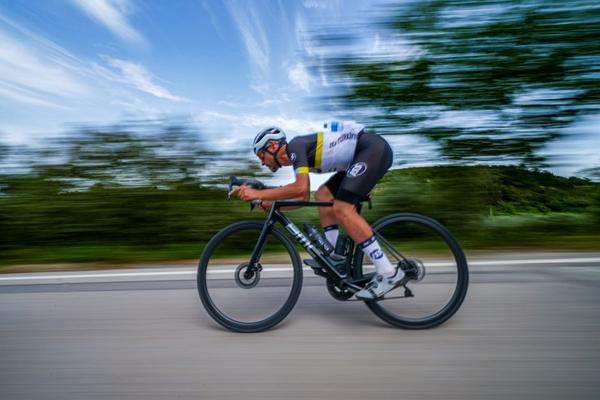
Riding smoothly through a bend can feel surprisingly difficult, even when your fitness is improving. One rider rolls around a corner calmly; another brakes halfway through, stiffens their arms and loses momentum. The difference is usually technique, not courage. Good road cycling cornering technique gives you a repeatable sequence: read the bend, choose a safe speed, position your body and follow a predictable line. Those habits matter on weekend rides and become even more valuable when you progress towards faster groups or racing.
Start the Corner Before You Reach It
The most important decision happens on the approach. Scan the road for the bend’s shape, surface changes, traffic, potholes and anything that might hide the exit. A corner you cannot see through deserves a slower entry than a wide, open bend. Never assume the road will straighten just because the first part looks gentle.
Brake Early, Then Let the Bike Roll
Apply both brakes progressively before leaning into the turn. This lets you shed speed while the tyres have more grip available for braking. As you enter, ease off the levers and keep your hands relaxed. Grabbing a brake while leaned over asks the tyres to slow and turn at the same time, increasing the risk of a skid.
That does not mean you must refuse to brake once turning. If a hazard appears, safety comes first: reduce lean if space permits, then brake as smoothly as conditions allow. The goal is to avoid putting yourself in that position through earlier observation. Practising smooth stops on a straight, quiet stretch builds the control needed for confident cycling corners.
Look Through the Bend, Not Down at Your Wheel
Your eyes help guide your steering. Look towards the road you intend to follow, shifting your attention from entry to the visible exit as the corner unfolds. Keep checking the surface between those points without fixing your gaze on a drain cover or kerb. Staring at a hazard often makes your line less deliberate.
Set Your Feet and Keep Your Upper Body Relaxed
For a typical road-bike turn, put the inside pedal up and the outside pedal down. In a right-hand bend, your left foot is the outside foot; in a left-hand bend, it is the right. Apply firm, comfortable pressure through that lower pedal. This creates a stable platform and helps prevent the inside pedal striking the road as the bike leans.
Keep a secure grip with slightly bent elbows rather than locked arms. Let the bike lean naturally, without dramatically hanging your body inside the turn. On a road bike, using the drops can improve access to the brakes and lower your riding position, but only if you can reach the controls comfortably. Smooth bike cornering technique depends more on balance and judgment than an exaggerated racing pose.
Choose a Line That Stays Safely Within Your Lane
On a clear, closed course, riders may use an outside-inside-outside path to open up the turning radius. Public roads require a different priority: your line must leave room for oncoming traffic, changing road edges and unexpected obstacles. Never cross the centre line or swing into another lane to imitate a racing apex.
Enter with enough space to turn gradually, aim towards a safe point around the inside of your available lane, and leave yourself margin on the exit. If the view is restricted, hold a conservative line rather than cutting towards a hidden bend. A fast-looking trajectory is useless if it leaves no escape route.
Adjust for Rain, Gravel and Descents
Wet paint, metal covers, loose grit and leaves can offer much less grip than clean, dry tarmac. Slow earlier, use gentler steering inputs and keep the bicycle more upright when crossing slippery patches. Avoid sharp braking on them whenever possible. There is no universal safe cornering speed: it changes with visibility, tyres, surface and conditions.
On descents, speed rises quickly, so make your decision before the bend tightens. Keep extra distance behind other riders and avoid chasing someone else’s speed through an unfamiliar turn. For more groundwork, practise road cycling braking technique and road cycling descending technique on easier terrain first.
Corner Predictably in Group Rides
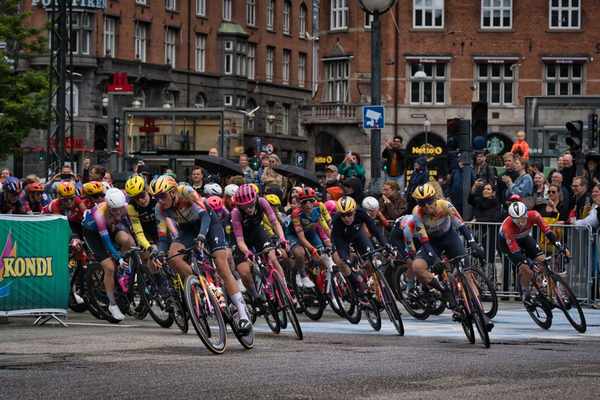
Cornering skills in cycling groups involve other people’s safety as well as your own. Look beyond the wheel ahead, leave a useful gap, and avoid sudden changes of direction or last-second braking. Do not overlap your front wheel with another rider’s rear wheel, particularly when the bunch is turning.
Call out relevant hazards when safe to do so and follow your group’s agreed signals. A rider ahead may know the road or may have misjudged it; neither their speed nor their line replaces your own assessment. In racing, smoothness helps preserve momentum, but on open-road group rides, predictable movements and adequate space come first. A separate guide to group riding etiquette can reinforce these habits.
A Simple Drill for Better Bike Handling
Choose a quiet, legal, traffic-free paved area with good visibility and no pedestrians in your practice path. Mark a broad curve with two soft markers, leaving generous room on every side. Ride through at an easy pace, braking beforehand, lifting the inside pedal and looking towards the exit. Repeat without trying to increase speed.
On the next passes, focus on one change at a time: first your eyes, then your braking point, then the pressure on the outside foot. Notice whether you hold a smooth arc without extra steering corrections. If you need to brake sharply or run wide, slow the next attempt. The aim is consistency, not a record lap.
Common Mistakes to Catch Early
Watch for entering too quickly, looking at the front tyre, gripping the bars tightly and pedalling with the inside crank down. Another mistake is treating every corner like a race: ordinary road bike handling should give you options when another road user appears. If you repeatedly drift wide, practise at a slower entry speed before changing anything else.
Frequently Asked Questions
Should I brake while cornering on a road bike?
Ideally, reduce most of your speed before you lean. If an unexpected hazard forces you to brake during the turn, do it progressively and reduce your lean where possible. Avoid abrupt lever inputs, especially on slippery surfaces.
Which pedal should be down in a corner?
Usually the outside pedal. Keep the inside pedal raised to reduce the chance of a pedal strike, and place comfortable pressure through the outside foot for stability.
How can I get faster at cornering without taking risks?
Build repeatability at modest speeds in a safe practice area. Improve your scanning, braking point and line before considering a little more pace. Speed comes from reliable control, not from forcing yourself into a turn too quickly.
Build Confidence One Bend at a Time
Confident cornering is the product of small choices made early. Read ahead, enter at a speed you can manage, look through the turn and keep your movements quiet. As those habits become automatic, corners stop interrupting your rhythm and start feeling like a natural part of the ride.